

Cycling and Photography: How I Capture Motion and Speed
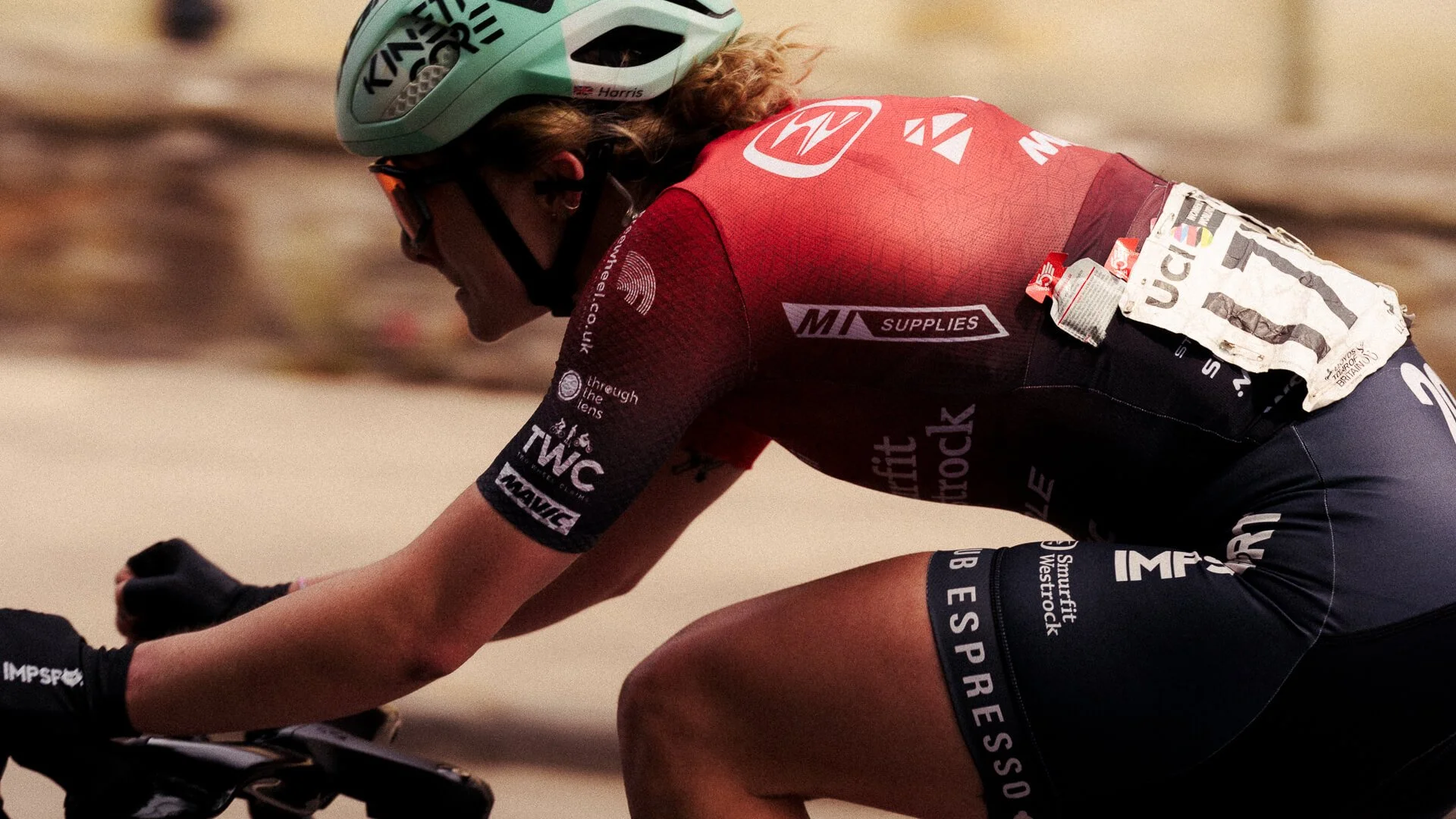
The way a bike moves through space has its own rhythm, and that is what I try to capture every time I shoot cycling. It is part sport, part storytelling, and part instinct. I have cycled for six years and ride almost every day around Stirling, Glasgow and the surrounding areas, with my home base in Cumbernauld. I love the sport and rarely enjoy rest days. I ride both solo and in groups and I take on endurance challenges like the West Highland Way in a single day. Because I live the sport, I see it differently through the lens. I understand the rhythm of a climb, the calm focus on a descent and the feeling of speed when the bike starts to float. That understanding shapes how I photograph cycling and why the results feel authentic.
Cycling is not just something I shoot as a job. It is one of the main creative influences in my life. The athlete, the movement and the environment come together in a way that feels cinematic. When you combine that with professional photography, the sport becomes an artistic medium rather than simple documentation. It is why I enjoy shooting cycling as much as I enjoy riding.
You can see more of this approach in my cycling photography portfolio, where I showcase how I capture action, atmosphere and speed.
Understanding the connection between cycling and photography
Every ride has a story. A simple road becomes dramatic when someone pushes hard over the top of a climb. A wet day creates texture and energy. A quiet morning ride feels peaceful in a way that translates beautifully into an image. The sport has emotion built into it which is why cycling and photography complement one another so naturally.
When I shoot, I focus on the feeling of the moment rather than only the technical aspect. A rider might look controlled to the eye, but the camera reveals the speed and intensity. A climb shows personality. A descent shows trust in the bike. A race shows timing and instinct. Photography lets me capture these things from the perspective of someone who trains, races and understands the physical effort behind every shot.
I also ride with a camera on holiday in Spain, usually Calpe, where the light and terrain give a completely different mood compared to Scotland. These trips keep my style balanced and help me test ideas that I bring back home.
Keeping the scene simple
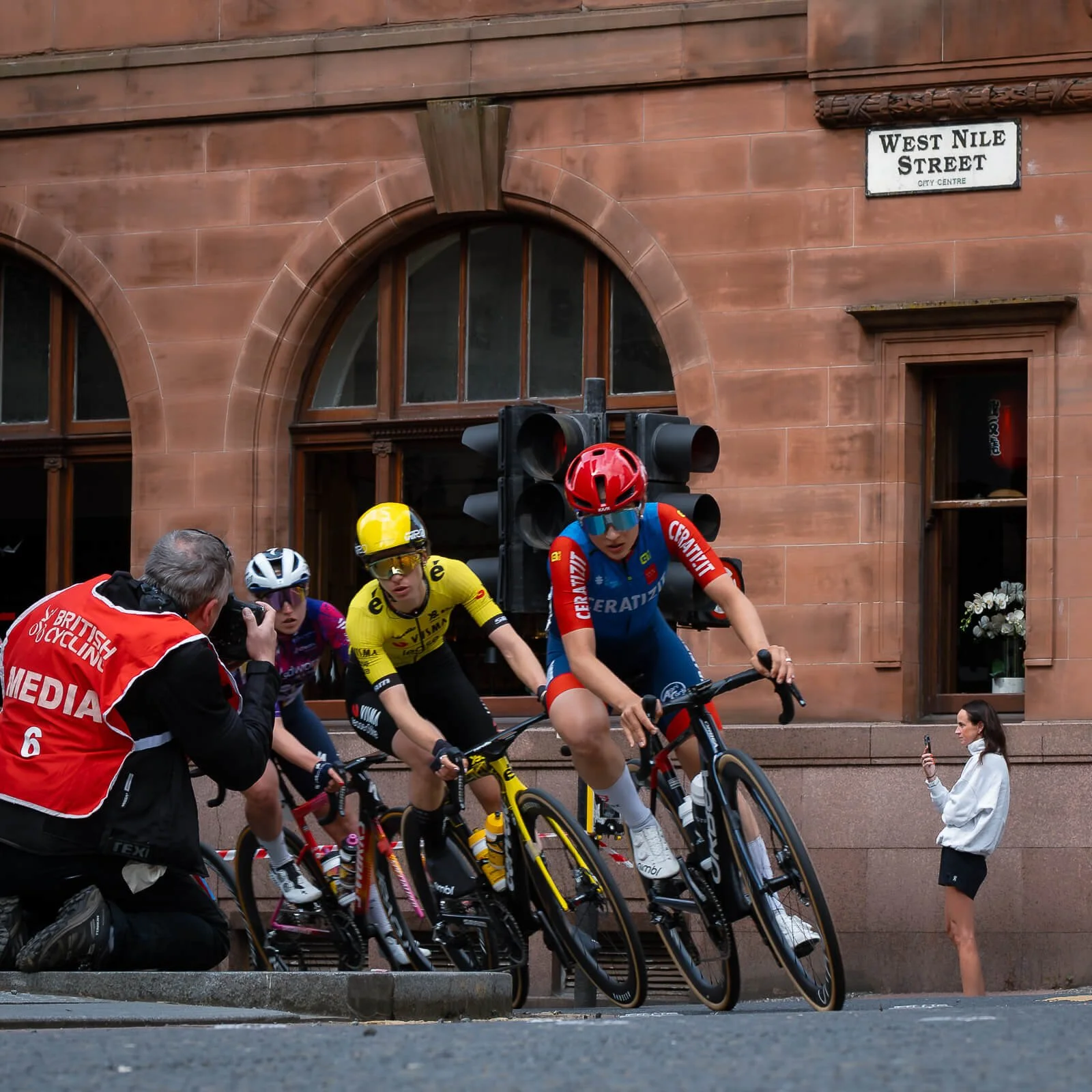
Simplicity often creates the strongest cycling images. A single rider on an open road says more than a cluttered frame. I strip the scene back to what matters. Scotland can feel chaotic with trees, rain and endless grey skies, but when you position the rider correctly, you find balance in what looks chaotic at first glance.
I like experimenting with focus to add depth or create a cinematic feel. Sometimes I focus behind the rider to show the space they move through. Sometimes I let the foreground blur to add atmosphere. I even shoot completely out of focus at times to capture the feeling rather than the detail. Photography becomes more interesting when you let creativity lead.
Working with Scotland’s lighting
Scotland is not known for dramatic sunlight. Most days look like someone has placed a huge softbox above the whole country. The lighting is flat, directionless and often colourless. It makes cycling photography more challenging because you rarely get natural separation between the rider and the scene. This is where artificial light becomes important. Flash gives you shape when the sky refuses to provide any. It lets you build contrast and define the cyclist when the environment offers none.
Even when the weather stays dull, you can create depth through the landscape. Tree lines, fences, rock walls and natural barriers act as framing tools that guide the viewer’s eye. Scotland may not always give you sunlight, but it does give you terrain that supports a strong composition. You can do a lot with texture, negative space and controlled angles, even if the sky gives you nothing to work with.
Angles that create atmosphere
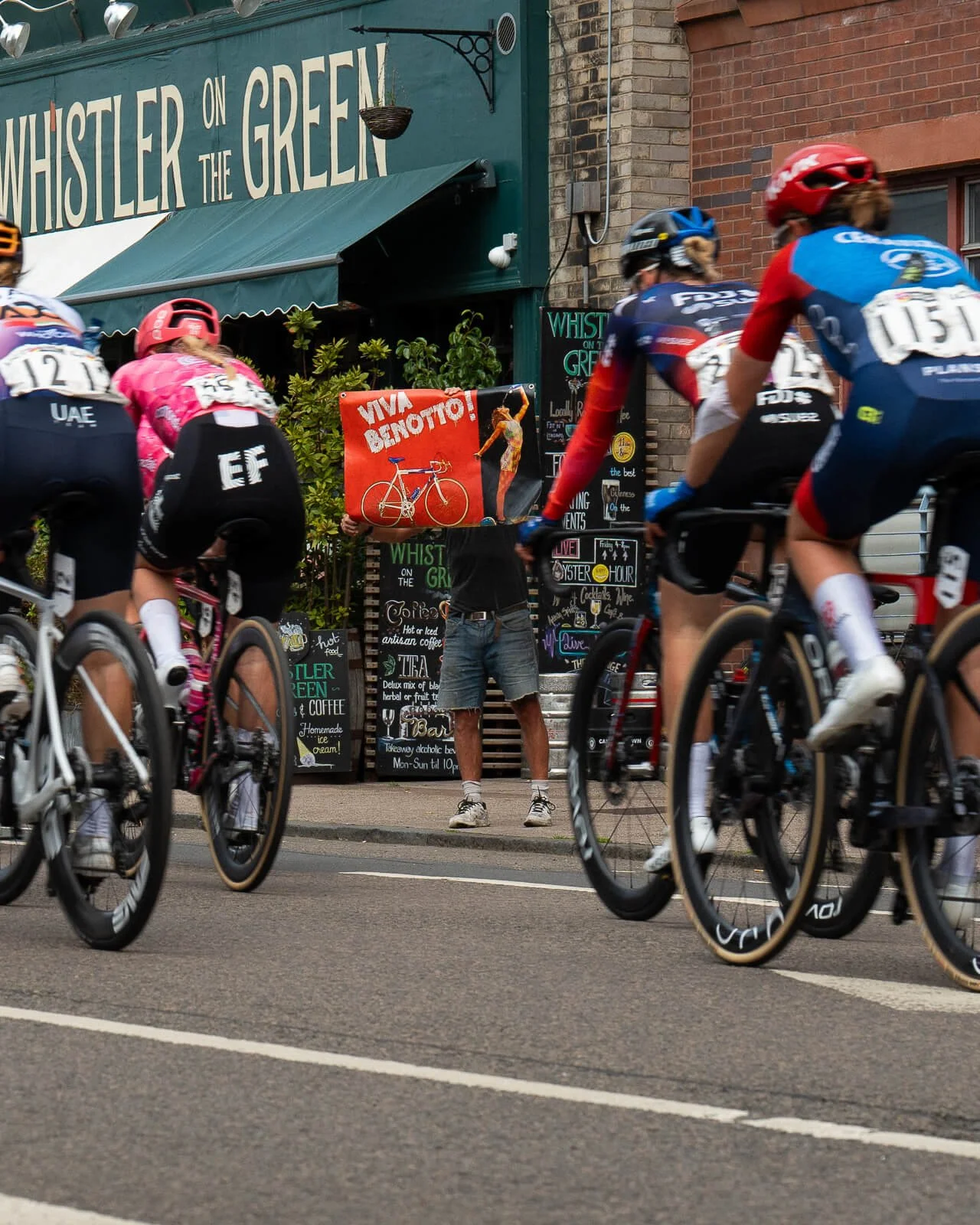
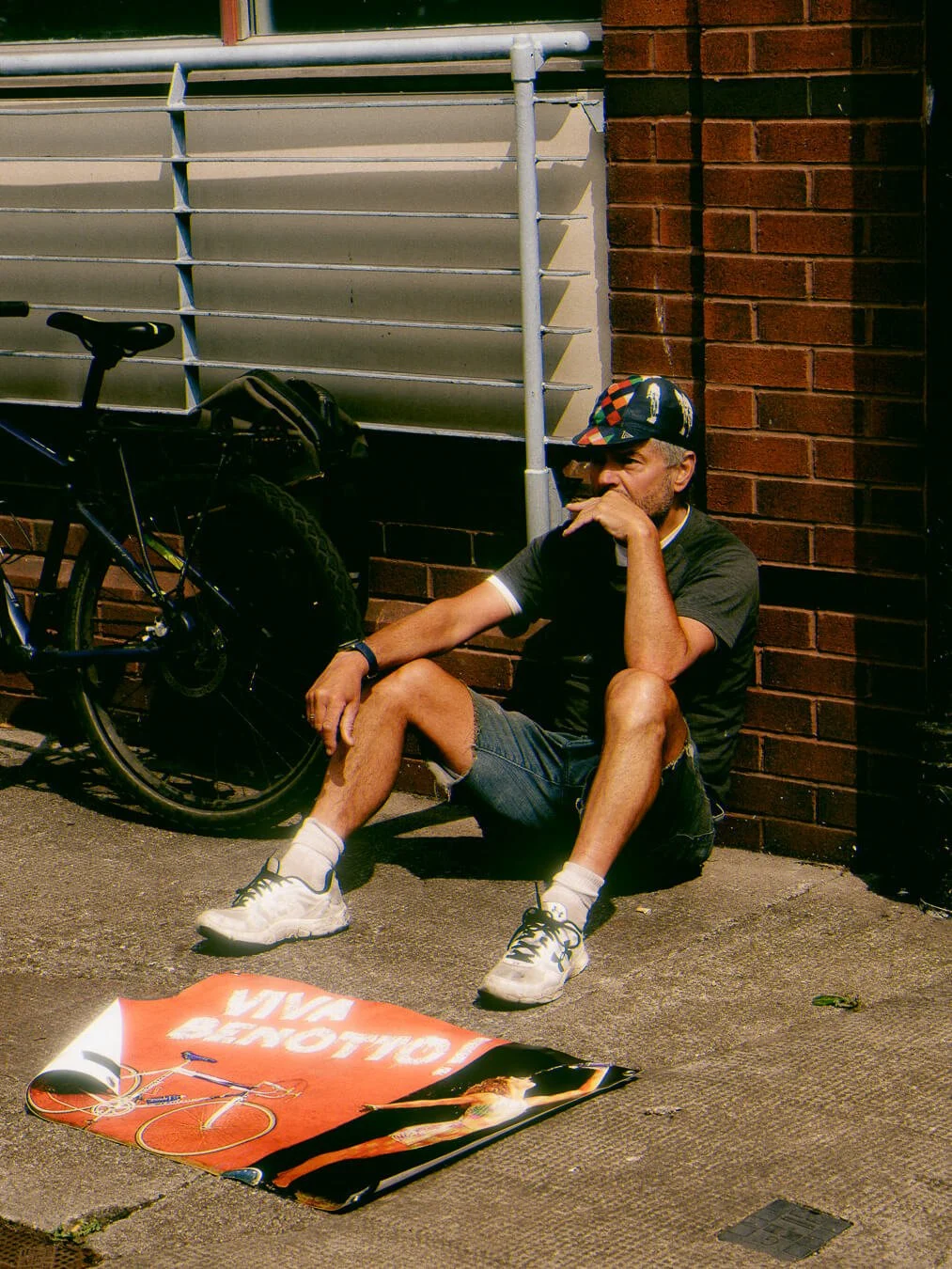
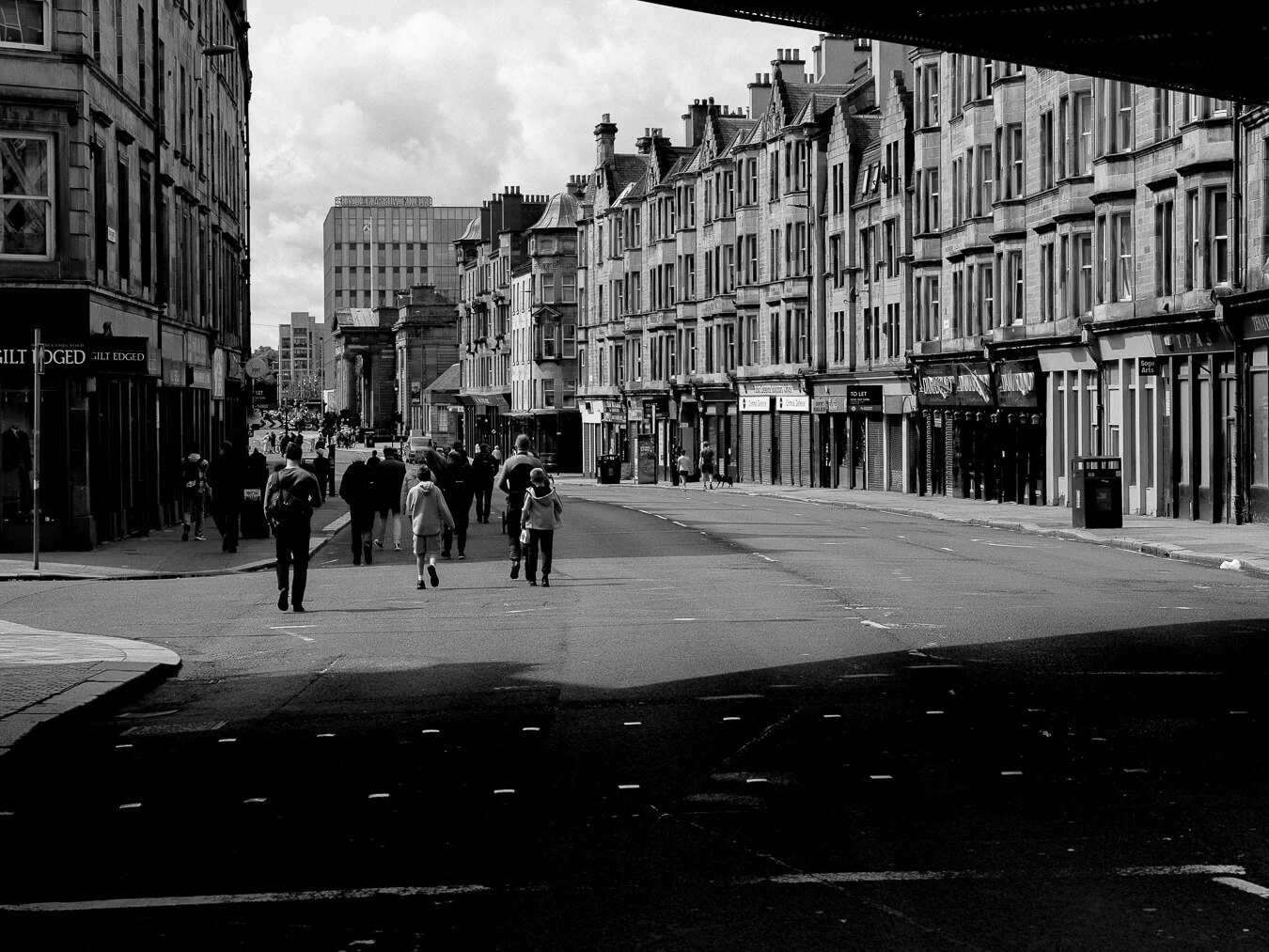
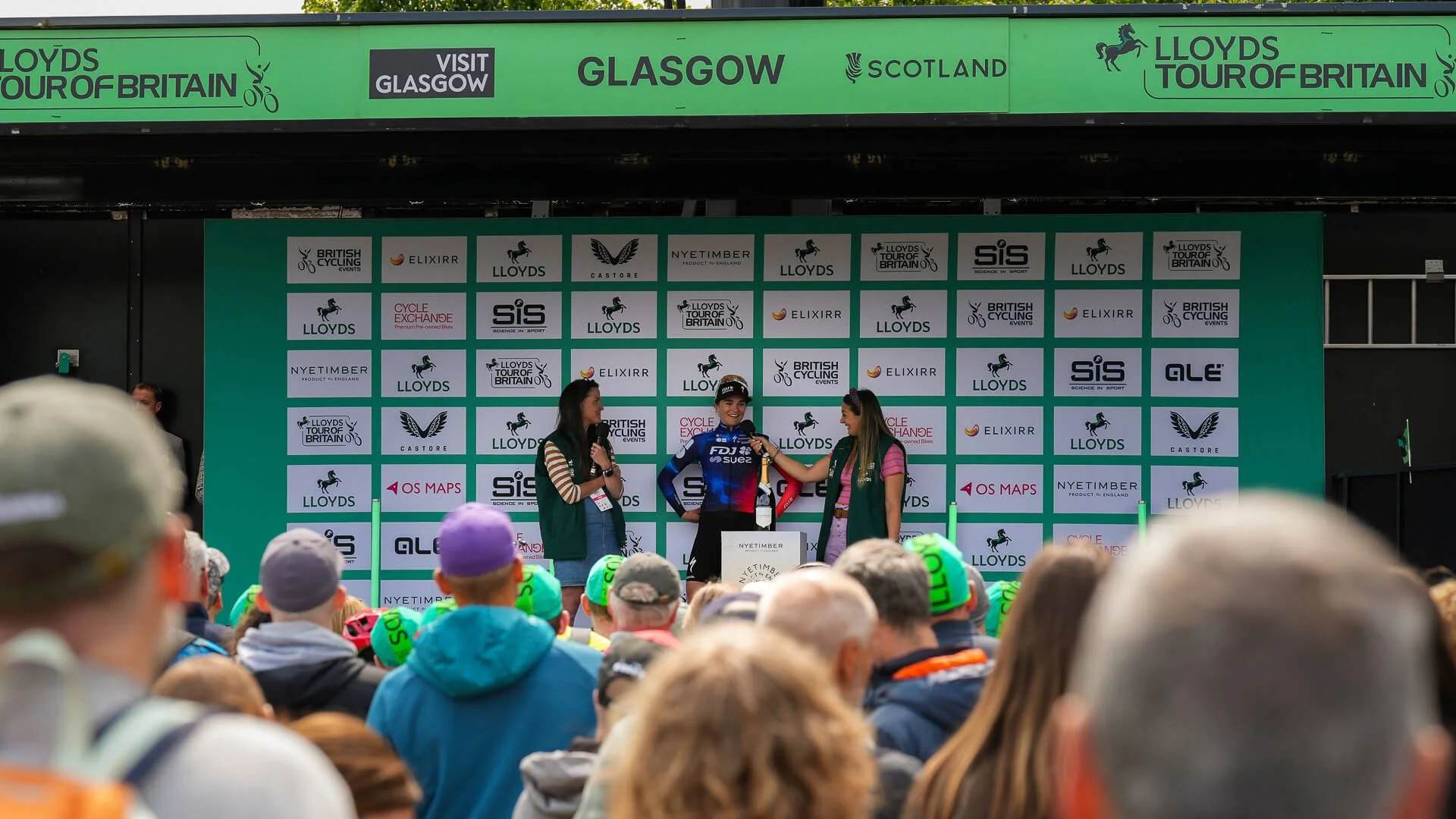
Angles are a major part of my process. Shooting from above frames the rider inside the road and makes their line clear. Shooting low exaggerates speed and brings intensity. Shooting through branches, windows or fences adds layers and texture that make the scene more immersive.
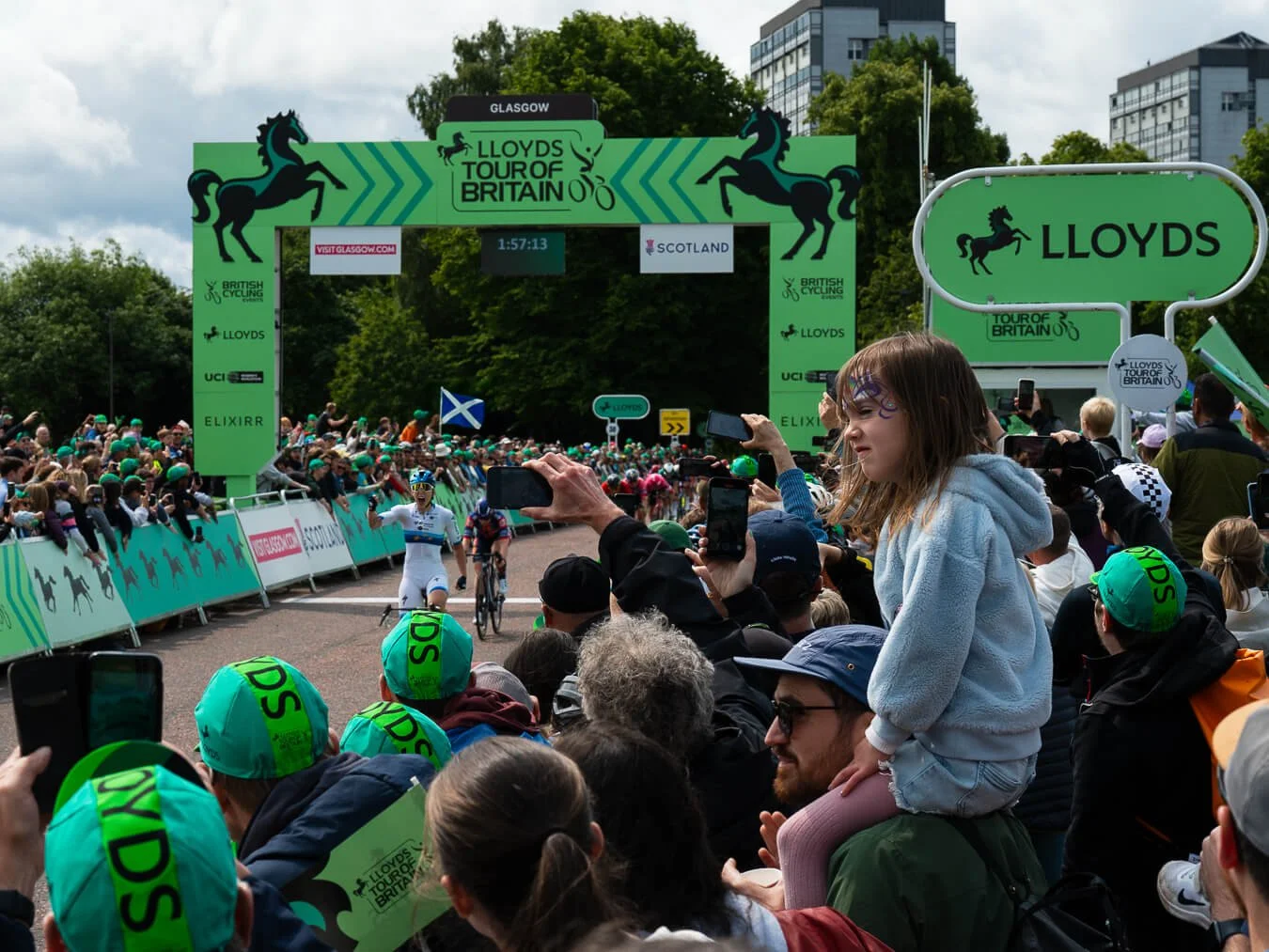
When I photographed the Women’s Tour of Britain final in Glasgow, I used angles that captured the energy of the race and the atmosphere of the city. The environment plays as much of a role as the rider in shaping the mood of the shot.
Because I am a cyclist myself, I can photograph from places many people cannot. I can shoot from the back of a moving car or even while riding my own bike, which fits perfectly into advertising campaigns that need authentic in motion coverage. Being part of the sport lets me move with the same flow as the riders I am photographing.
Capturing speed and movement
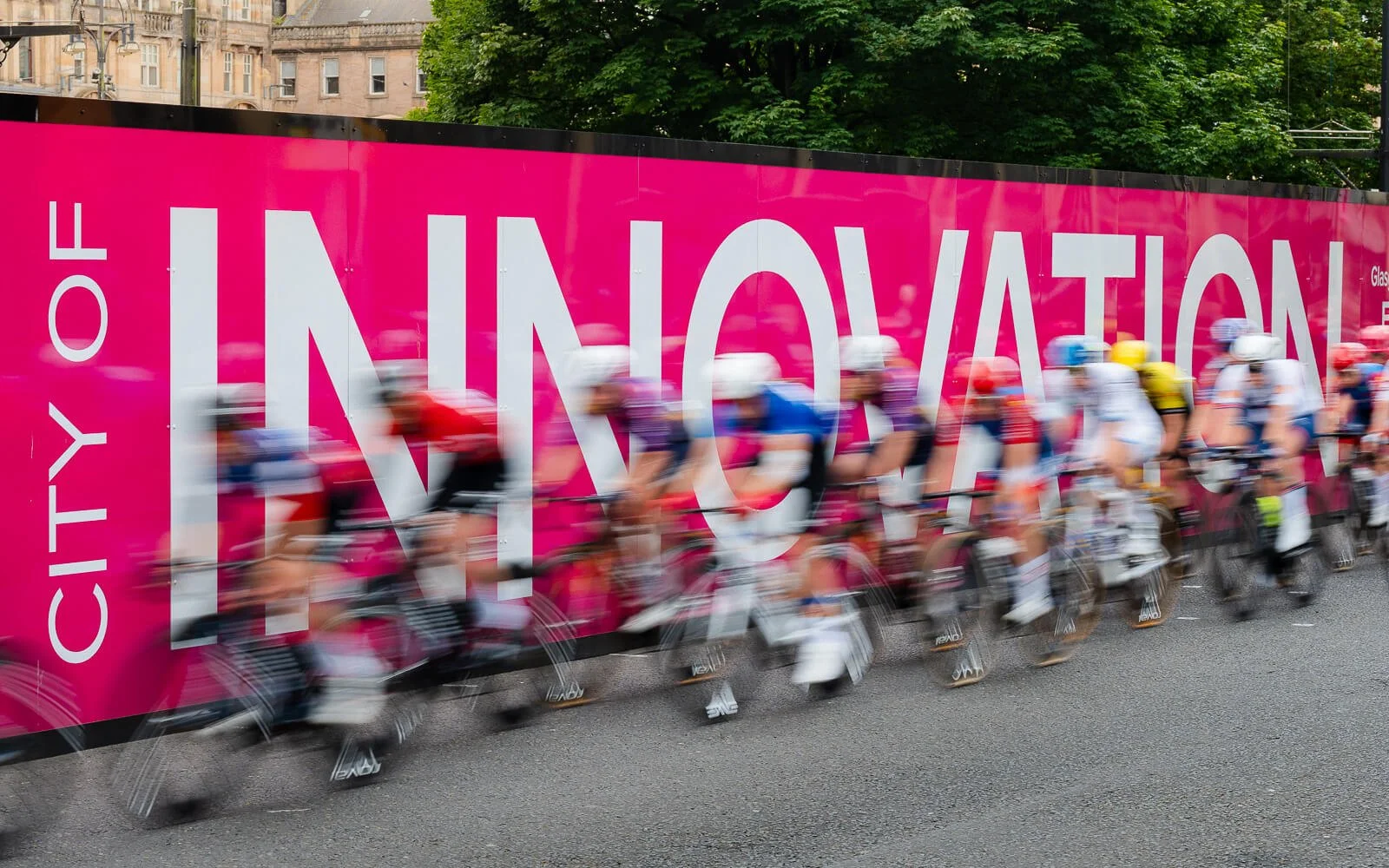
Not a panning shot but a slow shutter handheld shot to show one of Glasgows Slogans as an overarching shot for the Womans Tour of Britain Race 2025
Panning is one of my favourite ways to show speed. A clean pan makes the rider sharp and the background blurred which creates the feeling of movement that cycling deserves. It takes practice and a lot of missed attempts, but when it works, it works beautifully.
For fast action I use back button focus and the highest burst rate my Sony camera can offer. Shooting RAW gives me full control in editing which is essential for outdoor sport. You can prepare for the moment as much as you want, but you still need luck. The key is shooting enough frames so that luck can find you.
If you want to see the equipment I use for cycling work you can view the equipment I use, which includes my cameras, lenses and accessories.
If you want another perspective on technique, Sony’s Alpha Academy has an excellent guide on cycling and photography, which explores the creative decisions behind capturing movement and emotion.
Black and white cycling photography
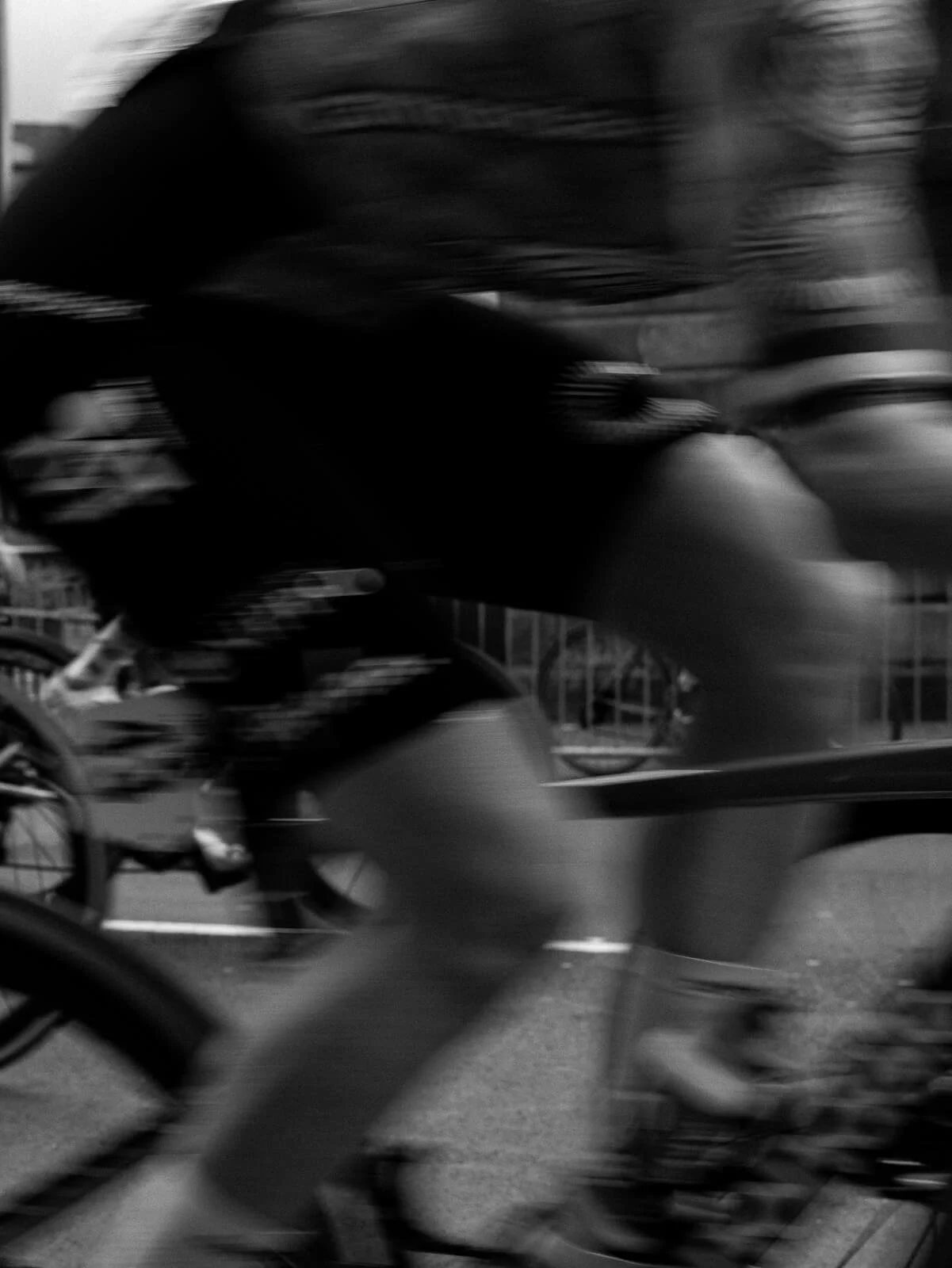
Black and white cycling photography brings a timeless feel to the sport. Removing colour forces the viewer to focus on shape, contrast and emotion. You see the strain on the face, the texture of the road and the drama of the weather more clearly. Scotland is ideal for monochrome because the mood of the landscape naturally suits it.
I use black and white when I want the image to feel intimate or atmospheric. Climbing shots work well. Misty mornings work well. Portraits at the top of a hill look powerful in monochrome. These images feel more like memories than simple photographs and that is why I enjoy using this style.
Conclusion
Cycling and photography allow me to merge two passions and create images that feel authentic, expressive and cinematic. I understand the sport from the inside which helps me anticipate moments that others might miss. Whether it is a commercial campaign, an event, a race or a personal project, I bring the same attention to detail and creativity to every shoot.
If you want to see how cycling photography strengthens brand identity, you can read how photography grows a brand, which explains how visuals build trust and awareness.
If you would like to work together you can book your shoot and I will get back to you as soon as possible.
