

How to Plan a Corporate Event That Runs Smoothly
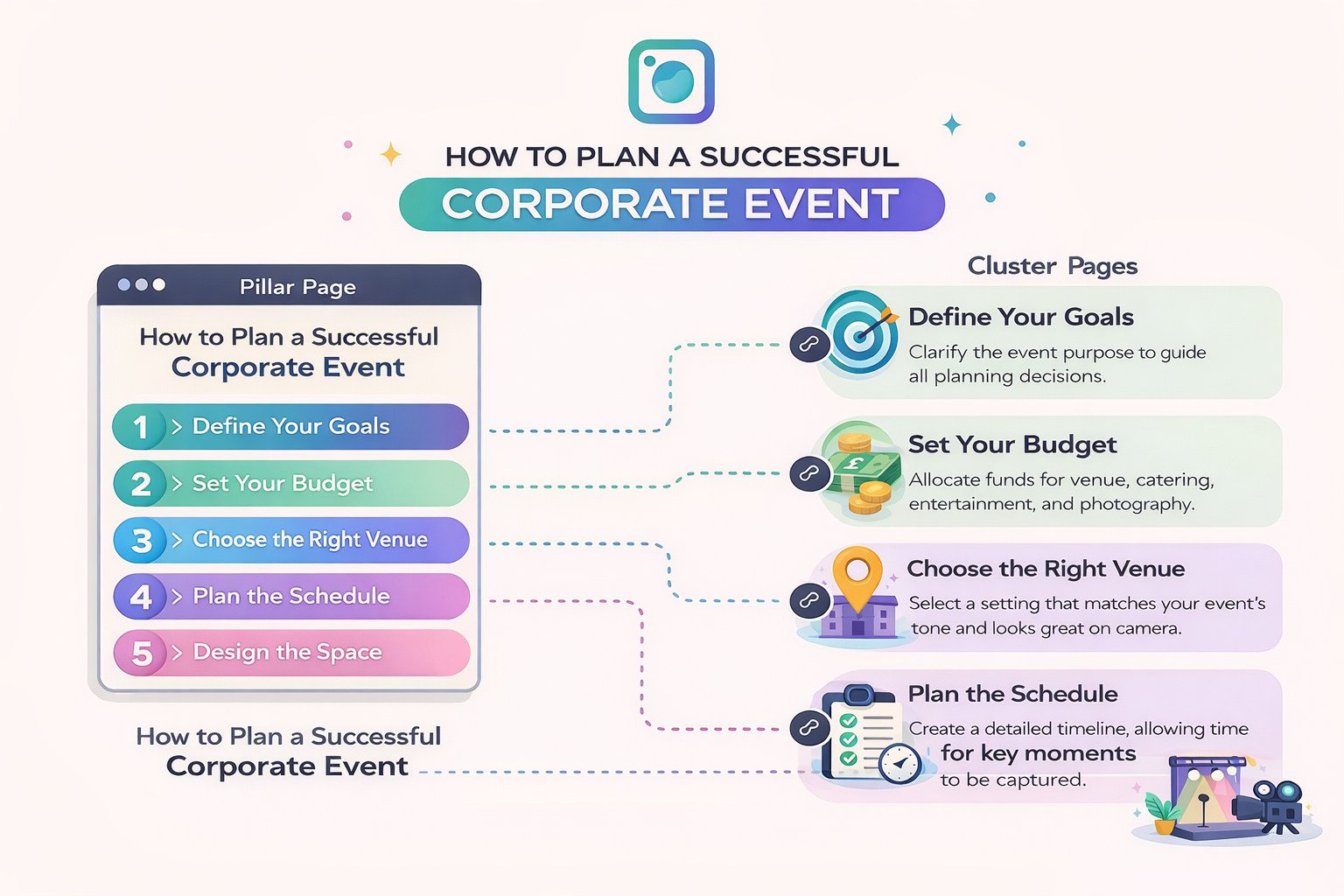
Corporate event planning plays a much bigger role than most organisers realise, especially when the goal is to create an event that looks professional, runs efficiently, and delivers strong PR imagery afterwards. From a photographer’s perspective, the smoothest corporate events are the ones where planning decisions are made with documentation, design, and timing in mind from the very beginning.
If you are an occasional event organiser looking to raise the standard of your corporate events, the biggest improvements rarely come from spending more money. They come from clearer preparation, better coordination with suppliers, and understanding how layout, lighting, and scheduling directly affect how your event is photographed and filmed.
This guide breaks down how to plan a corporate event that runs smoothly, focusing on the practical decisions that make a real difference on the day and in the final images used for marketing, PR, and internal communications.
Planning
Good corporate event planning starts long before guests arrive. The decisions made at this stage determine how the event feels in the room and how it translates visually afterwards.
Pinpoint Your Event Goals
Before venues are booked or suppliers are contacted, be clear on what the event is meant to achieve. Is it designed to strengthen internal culture, impress clients, launch a product, or create content for future marketing and PR.
Clear goals allow photographers and videographers to anticipate moments that matter. Knowing whether the focus is networking, presentations, or atmosphere helps shape coverage so the final imagery reflects the purpose of the event rather than just recording what happened.
This clarity is what separates generic event photos from purposeful documentation that supports corporate event photography in Scotland at a professional level.
Establish a Budget
A realistic budget protects the event from last minute compromises. From a documentation point of view, it is important to understand how the budget is distributed rather than just the total figure.
Lighting, staging, and layout often have a greater impact on photography than expensive decor that does not photograph well. Allocating budget to elements that improve visibility, depth, and flow will always pay off in the final imagery.
This is also where early conversations about professional event videography services help ensure the schedule and setup support both stills and motion without conflict.
Decide on a Venue

Venue choice has a direct impact on how an event photographs. Ceiling height, wall colour, window placement, and available power all influence lighting options and shooting angles.
Spaces that look good in person do not always translate well on camera. Strong corporate event planning considers how the room will appear from multiple viewpoints, not just how it feels to stand in.
Referencing event lighting and venue design guidance at this stage can help avoid common issues such as harsh overhead lighting, cluttered backgrounds, or dark corners that limit coverage.
Determine Your Guest List
The number and type of guests affects movement, spacing, and the rhythm of the event. Overcrowded spaces restrict photography and make it difficult to capture clean images of interactions.
Knowing who will attend also helps plan moments worth documenting. Senior stakeholders, guest speakers, or award recipients should be factored into the schedule so they are photographed in flattering light and appropriate settings.
Clear guest planning also allows photographers to work discreetly while still capturing meaningful interactions.
Food and Entertainment

Food and entertainment shape the atmosphere but they also shape the visual story of the event. Consider how serving areas are lit, where performances take place, and whether there is enough space for guests to engage without blocking sightlines.
Live elements work best when they are positioned with documentation in mind. A well placed stage or performance area creates focal points that translate into strong imagery rather than scattered, hard to capture moments.
Marketing
Corporate events rarely end when the last guest leaves. How the event is marketed before and after depends heavily on the quality of the content captured.
Social Media

Social media content benefits from moments that feel natural but intentional. Planning where key interactions happen allows photographers to capture images that feel authentic while still representing the brand professionally.
This is where coordination between organiser and photographer matters most. Sharing the event schedule in advance and discussing priority moments ensures coverage supports both live posting and future campaigns.
Well planned events make it easier to repurpose imagery for using event content for PR and marketing without relying on staged or generic visuals.
Email Marketing

Post event email marketing often relies on a small selection of strong images that summarise the event quickly. Clean compositions, visible branding, and clear context help recipients understand the value of attending future events.
This reinforces why corporate event planning should consider documentation outcomes as early as possible rather than treating photography as an afterthought.
I have helped brands by collaborating to produce photography or videography for their email system Klaviyo, we work together to understand exactly what is said in the funnel and workout the best visuals for each.
Giveaways and Competitions

Interactive elements such as giveaways work best when they are designed with flow and visibility in mind. Avoid placing these activities in cramped or poorly lit areas.
When planned properly, they create moments of engagement that photograph well and add variety to the visual narrative of the event.
Summary
From a photographer’s point of view, the smoothest corporate events are the ones where planning, design, and scheduling are aligned with documentation goals. The biggest mistakes organisers make are not obvious on the day but become clear when reviewing the images afterwards.
Strong corporate event planning considers how spaces look on camera, how light moves through the room, and how the schedule allows key moments to breathe. It also relies on open communication between organiser and photographer so expectations are clear before the event begins.
If you want your next corporate event to look as good as it feels, invest time in preparation, design with intention, and treat documentation as part of the planning process rather than something added at the end.
