

Industrial Photography: Planning for People, Process, and Live Environments
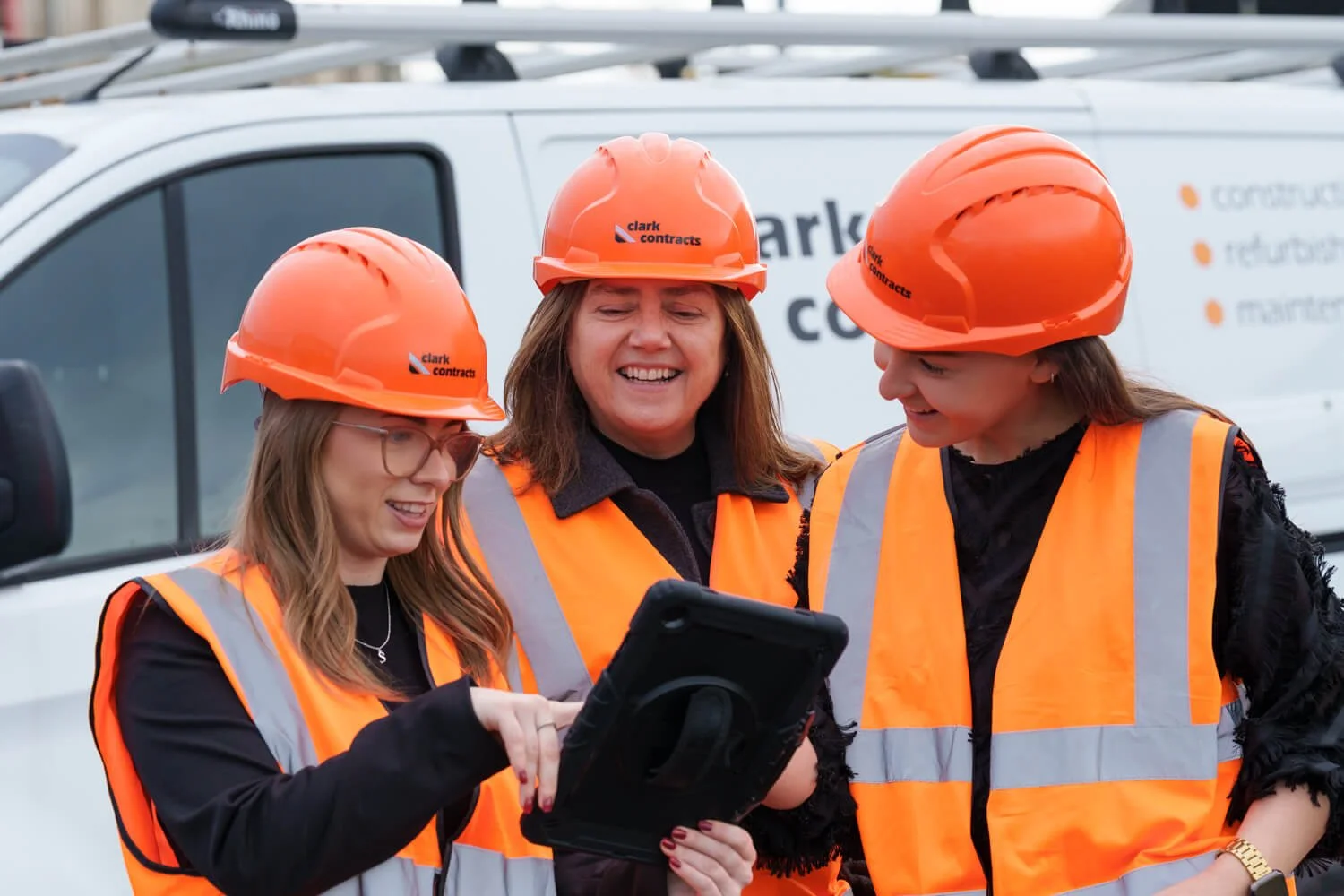
Industrial photography is often misunderstood as simply documenting buildings, machinery, or finished projects. In reality, the most effective industrial photography is about understanding people, process, and the environment long before a camera is lifted.
For marketing teams and agencies working within manufacturing, construction, utilities, or healthcare, the difference between average and exceptional industrial photography usually comes down to planning and experience on live sites. This is where many photographers struggle, and where real industrial understanding becomes invaluable.
I approach industrial photography from a background that goes beyond photography. Before working professionally with a camera, I spent two years as an electrical and data communications apprentice, working across large scale live projects throughout the UK. That experience fundamentally shapes how I plan, move, and work within industrial environments today.
Why Industrial Photography Fails More Often Than Clients Realise
Most industrial photography problems do not come from equipment or editing. They come from misunderstandings about how industrial sites actually function.
Marketing teams are often asked to commission photography without having full visibility of site constraints, safety procedures, or production pressures. Photographers without site experience may not recognise these issues until they are already causing friction.
Common failures include disrupting workflows, misunderstanding access permissions, underestimating safety requirements, or focusing entirely on machinery while missing the human element that gives industrial imagery meaning.
These mistakes are rarely obvious during the shoot. They become clear later when images feel disconnected from reality or fail to communicate how a business truly operates.
Manufacturing Photography in Live Production Environments
Manufacturing photography is one of the most misunderstood areas of industrial photography, particularly on active production floors where output, safety, and efficiency take priority over marketing considerations.
Manufacturing environments are not static spaces. Production lines operate to schedules, changeovers happen at specific intervals, and downtime is often measured in minutes rather than hours. Photographing within these constraints requires an understanding of how manufacturing actually works, not just how it looks.
Having worked on live industrial and manufacturing sites in my earlier career, I understand that the worst thing a photographer can do is slow a process down. Good manufacturing photography is planned around production cycles, not imposed on them.
This means knowing when people are available, when machines are running at capacity, and when photography can happen without disrupting flow. It also means understanding that some of the most valuable images are captured during routine operation, not staged moments.
From a marketing perspective, manufacturing photography works best when it shows people working within process. These images communicate capability, scale, and competence far more effectively than empty production lines ever could.
An Industrial Photography Planning Framework That Works on Live Sites
The strongest industrial photography begins with a planning framework that respects the environment it operates within. This is where lived site experience matters.
Step One: Understand the Site Before You Arrive
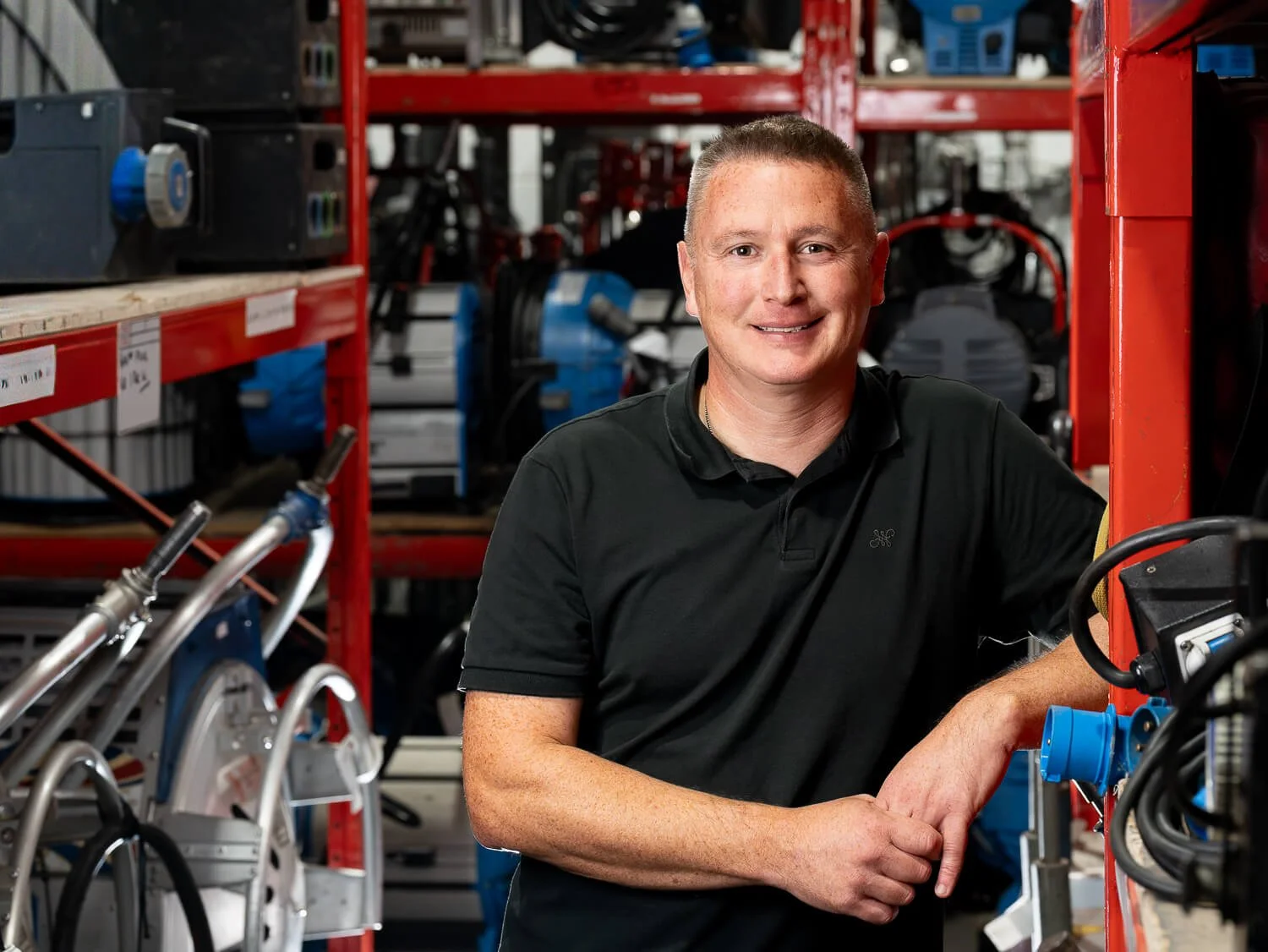
Panavision Rental House (GM) staff Portrait. This was taken quickly as they are extremely busy with large lorries collecting equipment for TV and Movies. We had about 15 minutes to shoot 3 varied areas of the warehouse. This means setting up a light that can move quickly and picking an area out of the way of traffic.
Industrial sites are controlled environments with rules, hierarchies, and operational rhythms.
Having worked on projects such as the Forth Valley Hospital build, touring Hilton hotels across the UK, and terminating fibre optic cable on offshore wind farms, I learned early that every site operates differently. Understanding access points, restricted zones, and safety protocols before arrival prevents delays and builds trust with site teams.
This approach underpins how I work as an industrial photographer in Scotland, particularly on active sites where disruption is not an option.
Step Two: Understand the People, Not Just the Process
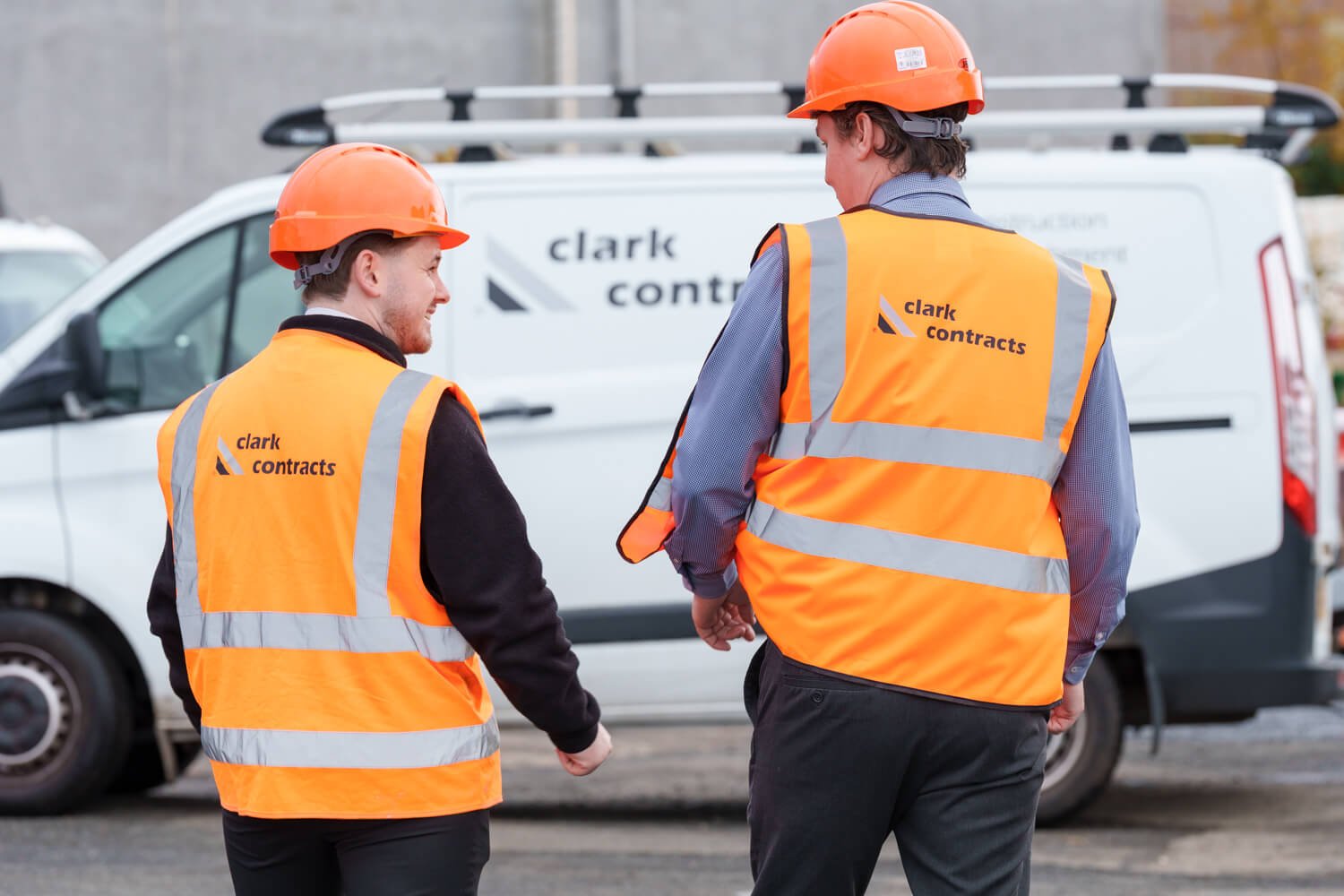
Industrial photography that focuses only on scale and machinery misses what clients actually value. People make industry function.
During my time working in hospitals such as Ninewells, installing data and electrical points directly into wards, I learned how sensitive environments demand awareness, discretion, and respect. That same mindset applies when photographing engineers, technicians, and site teams today.
Images that show people within process communicate capability, culture, and competence far better than empty spaces ever could.
Step Three: Plan Around Process, Not Convenience

Many industrial shoots fail because photography is treated as something that can simply be slotted into a schedule.
Production cycles, safety windows, and operational priorities dictate when meaningful images can be captured. Planning around these realities allows photography to happen efficiently without slowing work or creating risk.
This is especially important on long term manufacturing photography projects, where consistency and minimal disruption matter more than quick wins.
Step Four: Anticipate the Safety and Access Pain Points Others Miss

One of the most common mistakes photographers make is assuming safety briefings are a formality.
Understanding permits, inductions, PPE requirements, and risk assessments is essential. Familiarity with health and safety guidance for construction and industrial sites ensures photography supports the site rather than becoming a liability.
Step Five: Capture Process, Not Just Output

Finished products rarely tell the full story. The value often lies in how something is made, maintained, or installed.
This is particularly relevant when considering how industrial companies use photography for marketing and PR, where credibility and transparency matter.
Step Six: Work With the Site, Not Against It
Industrial photography succeeds when photographers integrate into site culture.
My background working across departments on live sites informs how I approach industrial photography today, allowing images to be captured without friction or disruption.
Step Seven: Plan for Risk, Not Just Visuals
Live industrial environments change quickly. Planning for these variables, including understanding risk assessments on live industrial projects, allows photography to remain flexible without compromising safety or outcomes.
Why Experience Matters More Than Equipment

Industrial photography is not about chasing dramatic angles at the expense of safety or process. It is about understanding how environments operate and working within them intelligently.
Having spent years travelling the UK on large scale projects, learning from engineers, contractors, and clinical teams, I bring that understanding into every industrial shoot. That experience cannot be replicated by reading guides or owning equipment. Although, I do love some great equipment.
Industrial Photography as an Authority Tool
When planned properly, industrial photography becomes more than documentation. It becomes a strategic asset that communicates capability, builds trust, and reflects competence.
